
The final mark on your product is often the first signal of its quality and authenticity. As it travels from your production line in Malaysia to the hands of a customer, that small code—be it an expiry date, a batch number, or a logo—carries the weight of your brand’s promise. Choosing the right machine to apply that mark is therefore not just an operational decision; it is a strategic one. Many businesses focus solely on the initial price, but this approach overlooks the bigger picture. A truly effective decision involves a deeper analysis of long-term costs, material suitability, regulatory demands, and the potential for future growth. This guide will walk you through a comprehensive framework to help you select a marking solution that serves your business not just today, but for years to come.
Evaluate The Total Cost of Ownership (TCO)
Looking beyond the initial price tag is the first step towards making a smart investment. The Total Cost of Ownership (TCO) gives you a much clearer picture of what a machine will truly cost over its lifespan. For Continuous Inkjet (CIJ) printers, this includes ongoing expenses for inks, make-up solvents, and routine maintenance parts like filters. You should also factor in potential production downtime during service or repairs. In contrast, laser marking systems typically have a higher upfront cost but involve far fewer consumables, leading to lower day-to-day operational expenses. By calculating the TCO, you can accurately compare different technologies and make a decision based on long-term value rather than short-term savings.
Assess Material Compatibility and Production Needs
While cost is a major factor, it is only part of the story if the machine cannot mark your product effectively. The suitability of a marking technology is directly tied to your product’s material and your production line’s speed. Here is a simple breakdown:
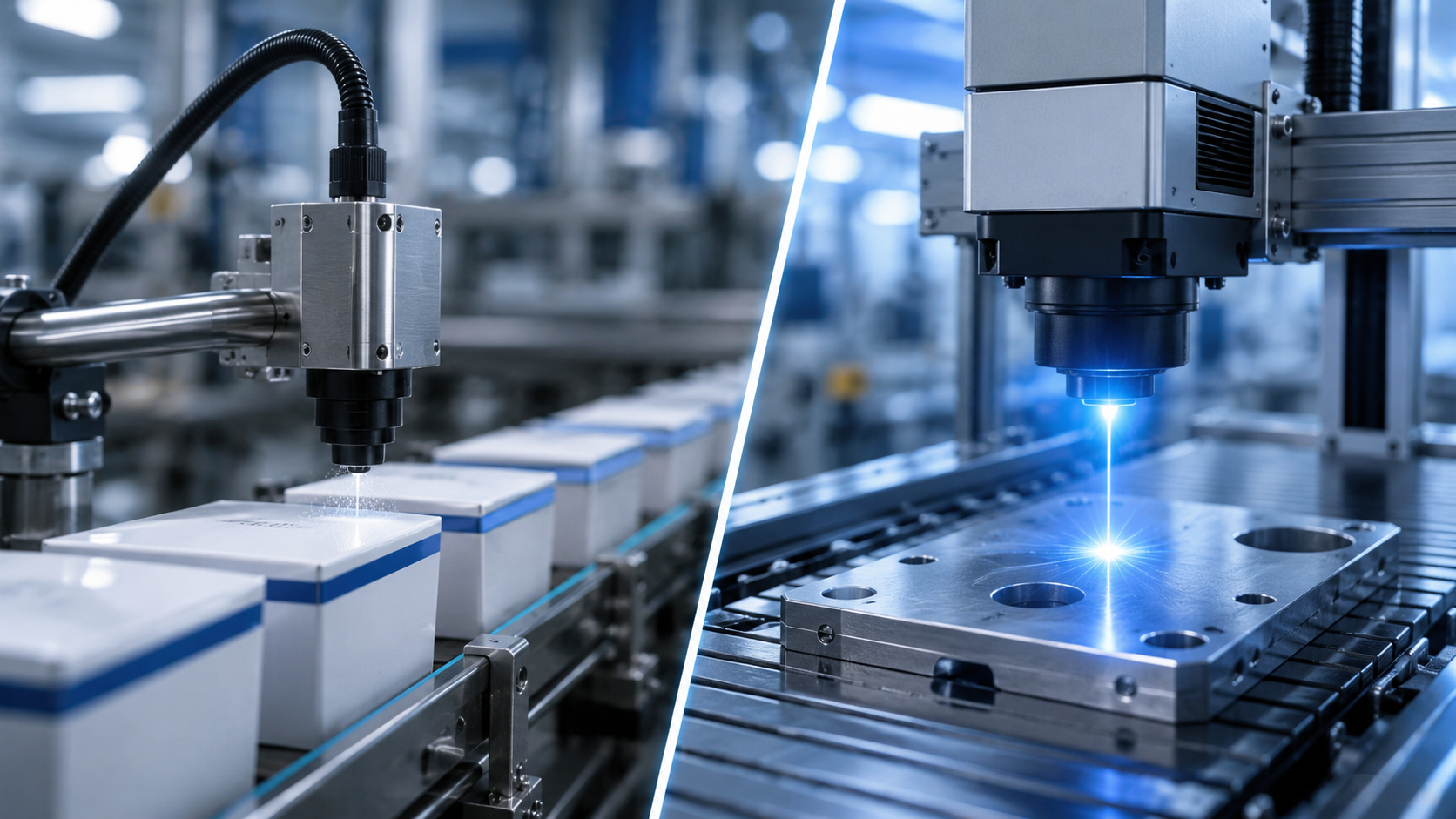
- Continuous Inkjet (CIJ) Printers: These are incredibly versatile, capable of printing on almost any surface, whether it is porous like cardboard or non-porous like plastic, glass, and metal. Their non-contact printing method makes them ideal for curved or uneven surfaces, and they excel in high-speed production environments common in the food, beverage, and consumer goods industries.
- Laser Marking Systems: Lasers offer unparalleled permanence and precision, making them perfect for creating crisp, high-quality marks on materials like metal, certain plastics, and glass. They are often the preferred choice for industries like electronics and automotive, where traceability and anti-counterfeiting marks are essential. Fibre lasers work well on metals, while CO2 lasers are better for organic materials like wood, paper, and glass.
Matching the technology to your specific application ensures the mark is clear, durable, and applied without disrupting your production flow.
Address Regulatory Compliance Requirements
In Malaysia, industries such as food and beverage, pharmaceuticals, and personal care are governed by strict regulations. These rules mandate that products must have clear, legible, and durable codes for traceability, including expiry dates, manufacturing dates, and batch numbers. Failure to comply can lead to product recalls, fines, and significant damage to your brand’s reputation. Choosing the right industrial marking machine is therefore critical for risk management. A reliable system ensures that every code meets the required standards, providing peace of mind and protecting your business. The permanence of laser marking or the adhesion of specialised CIJ inks can be key to meeting these stringent requirements.
Leverage Advanced Capabilities For Branding and Quality Assurance
A modern marking system can do more than just print functional codes. It can become a tool for enhancing your brand and assuring quality. High-resolution laser markers, for example, can etch intricate logos or QR codes onto your products. These QR codes can link customers to your website, offer promotional content, or provide detailed product information, creating an interactive experience. Furthermore, permanent, high-fidelity marks act as a powerful anti-counterfeiting measure, protecting both your brand and your customers. Using your marking equipment for these advanced applications turns a manufacturing necessity into a value-added feature.
Optimise Operational Reliability and Future-Proof Your Solution
Once installed, your marking system must run reliably day in and day out. The operational demands of CIJ and laser systems differ significantly. CIJ printers require more hands-on attention, including regular printhead cleaning and fluid replenishment, to maintain optimal performance. On the other hand, laser markers generally require less frequent maintenance. Regardless of the technology, partnering with a responsive service provider is essential. Looking ahead, it is also wise to select an industrial marking machine that can integrate with emerging trends like Industry 4.0. A system that can connect to your factory network allows for remote monitoring, automated data logging, and seamless integration with your production-line controls, making your operations smarter and more efficient.
In conclusion, selecting the right marking and coding solution is a pivotal decision that impacts your operational efficiency, brand integrity, and bottom line. It requires moving beyond a simple price comparison to a holistic evaluation of the Total Cost of Ownership, material compatibility, and regulatory needs. By carefully considering whether a versatile CIJ printer or a precise laser marker is the better fit for your production line in Malaysia, you can ensure compliance and enhance your product’s appeal. Furthermore, thinking about long-term reliability and future integration capabilities will safeguard your investment. By adopting this data-driven framework, you empower your business to choose a solution that not only meets today’s demands but also supports tomorrow’s growth. We are here to help you navigate these choices and find the perfect fit for your unique needs.
FAQs
- What is the main difference between inkjet and laser marking for industrial use?
The main difference lies in how they apply marks; inkjet printers spray ink onto a surface, making them versatile for various materials, while laser machines use a focused beam of light to etch or alter the surface, creating a permanent mark.
- How do I know which industrial marker is right for my product’s material?
CIJ inkjet printers work well on almost any material, including plastic, glass, and metal, while laser markers are best for permanent marks on materials like metal, wood, and certain plastics. We recommend consulting with our experts at Atlas Marking to test your specific material.
- Are laser marking machines more expensive than CIJ printers?
Laser marking machines typically have a higher initial purchase price, but their Total Cost of Ownership is often lower over time because they do not require consumables like inks and solvents, unlike CIJ printers.
- Can Atlas Marking help with installation and training in Malaysia?
Yes, we provide comprehensive on-site installation, commissioning, and operator training for all our marking and coding systems across Malaysia to ensure your team can operate the equipment efficiently.
- Why are clear date and batch codes so important for products sold in Malaysia?
Clear date and batch codes are a regulatory requirement in Malaysia for many industries, such as food and pharmaceuticals, to ensure product traceability, consumer safety, and compliance with national standards.