
Knowledge Centre
Learn more with us



Frequently Asked Questions
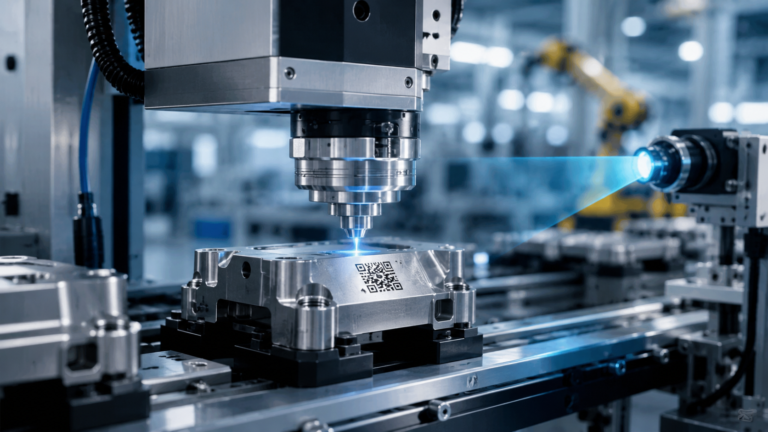
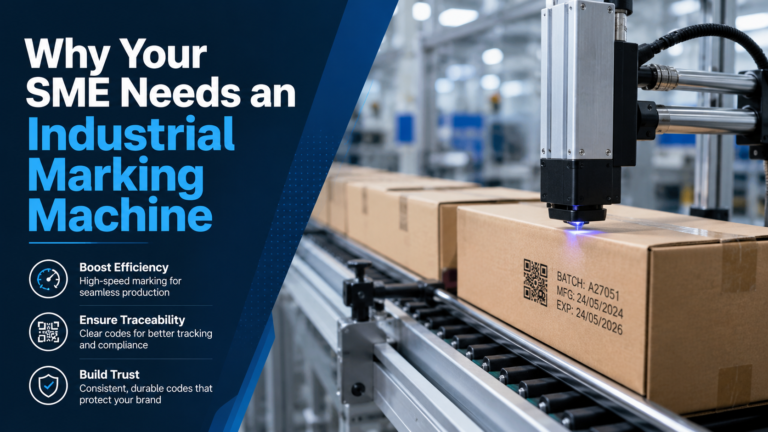
Laser marking enhances traceability by creating permanent, high-contrast identifiers such as Data Matrix codes, serial numbers, and batch codes directly on a product. Unlike labels that can peel or fade, laser marks withstand harsh industrial environments, ensuring a product can be tracked from raw material stages to the end consumer. This level of visibility is essential for quality control, regulatory compliance, and efficient recall management.
Yes. Modern industrial marking solutions, like those provided by Atlas Marking, are
designed for seamless integration with current manufacturing workflows. These systems
are engineered to keep pace with high-speed production lines, ensuring that adding a
marking step does not create a bottleneck or compromise overall operational efficiency.
Atlas Marking offers flexible solutions compatible with a wide range of industrial materials, including:
- Metals: Steel, aluminum, and various alloys.
- Plastics: High-density polymers and specialized industrial plastics.
- Packaging: Corrugated cardboard, films, and containers.
- Components: Small industrial parts and electronic housings.
Upgrading to advanced industrial marking reduces long-term operational costs by
minimizing human error, rework, and material waste. By ensuring every product is
identified correctly the first time, manufacturers avoid the expenses associated with
mislabeled goods and disorganized supply chains. It is a strategic investment that
strengthens productivity and supports long-term business growth.
- Instant Drying: UV printing uses ultraviolet light to cure or dry the ink as soon as it is applied to the material. This leads to faster production times and eliminates the need for additional drying time, unlike traditional printing methods where ink may take hours to dry.
- Enhanced Durability: UV-cured inks are more resistant to fading, scratching, and chemical damage. This makes UV printing ideal for creating long-lasting prints on various surfaces, including those exposed to harsh environments.
- Versatility: UV printing can be used on various materials, including plastics, metals, and glass. This versatility makes it suitable for multiple applications, from promotional items to industrial parts.
- Eco-Friendly: UV printing is more environmentally friendly than many traditional printing methods because it produces fewer volatile organic compounds (VOCs). The process also reduces waste since it does not require additional solvents or primers.
- Customization and Personalization: UV printing allows for high levels of customization and personalization, including the ability to print on custom-shaped objects or with variable data. This makes it ideal for bespoke or limited-run products.
- No Smudging or Bleeding: The instant curing process prevents the ink from smudging or bleeding, ensuring clean and precise prints. This is especially beneficial for detailed designs and small text.
In summary, UV printing offers faster drying times, greater durability, and broader material compatibility, making it a superior choice for many applications compared to traditional printing methods.
- Hard Objects (such as Metals, Plastics)
Precision and Quality: UV lasers provide high-precision markings on hard materials such as metals and plastics. They can create detailed, high-resolution prints including text, barcodes, and logos. The UV laser’s fine beam ensures sharp, clear marks that are durable and resistant to wear.
Minimal Heat Impact: UV lasers operate at lower temperatures than other lasers, which minimizes heat impact on hard materials. This feature prevents deformation and preserves the integrity of the substrate while producing high-quality marks.
Applications: UV laser marking is ideal for various industrial applications, including electronics, automotive parts, and plastic components. It’s beneficial for materials that require high contrast and fine details.
- Glass Objects
Marking Process: UV lasers create permanent marks on glass by inducing a chemical reaction in the material’s surface. This process results in precise, high-contrast markings without additional coatings or treatments.
Heat Management: Since UV lasers are less heat-intensive, they effectively mark glass without causing thermal damage or compromising the glass’s structural integrity. This is crucial for maintaining the quality and clarity of the glass.
Applications: UV laser marking on glass is used for various purposes, including personalized glassware, bottles, and decorative items. It allows for intricate designs and clear text, making it ideal for functional and aesthetic applications.
In Summary, UV laser marking provides excellent results on hard and glass objects. Hard materials, offer precision and durability with minimal heat impact, making them suitable for various industrial uses. For glass, it ensures high-quality, permanent marks while preserving the glass’s integrity, making it ideal for personalized and decorative applications.
Inkjet printer ink is generally designed to be durable and adheres strongly to various surfaces, making it resistant to smudging, water, and general wear. The removal can vary based on factors such as:
- Surface Type: Inkjet ink can be more challenging to remove from non-porous materials like plastics and metals compared to porous surfaces like paper.
- Ink Formulation: Different ink formulations have varying degrees of removability. While standard inks are made for durability, some specialty inks may be easier to remove depending on their chemical composition.
- Scratch Resistance: UV inks are known for their excellent scratch resistance. The UV curing creates a hard, durable surface that resists abrasion and physical damage, making UV inks ideal for applications subjected to wear and tear.
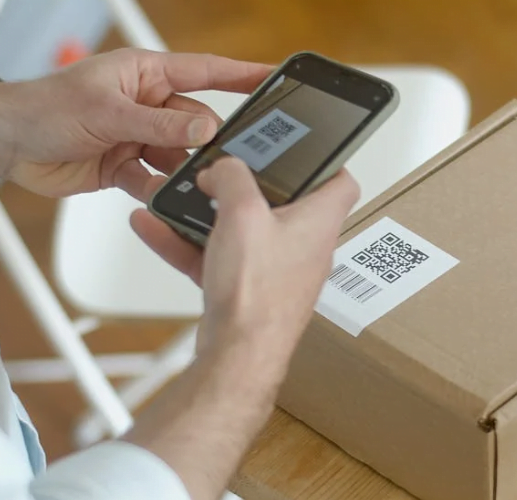
- Barcode and QR Code Printing: UV inks provide high contrast and sharp detail, essential for accurately scanning barcodes and QR codes. Their durability ensures that these codes remain legible over time.
- Alcohol Testing: UV inks are stable and resistant to solvents like alcohol once cured. They do not easily dissolve or smudge, making them suitable for applications exposed to alcohol or other chemicals.
Applications:
- Durability Testing: UV inks can be tested for scratch resistance to meet high-durability requirements.
- Barcode and QR Code: UV inks ensure clear, scannable barcodes and QR codes with high precision.
- Alcohol and Chemical Exposure: UV inks offer stability and chemical resistance, making them ideal for products exposed to alcohol or other solvents.
Yes, you can provide samples for us to test. We offer sample testing to evaluate how our inks perform on your specific materials and under various conditions. This allows you to assess their suitability for your needs before placing a large order. Contact our team for more details on how to submit your samples for testing.
LEARN MORE WITH US
Knowledge Centre
Explore expert insights, technical guides, and answers to your most common questions about industrial laser marking, inkjet coding, and traceability solutions.
ARTICLES & GUIDES